What Do We Mean When We Call Something “Evil”?
One of my favorite classes I teach is “The Psychology of Evil”. This is one of the classes that I created for my institution, after being inspired by reading Chris Burris’s book Evil in Mind (2022). Sadly, it doesn’t look like my course will be running this summer, so I’m a little bummed out. With that on my mind, I figured that a blog post about the topic would be a good enough effort for this week! So, when I teach the course, I start by asking the above question: “What is evil?”. Before students answer, I ask them to actually sit with the question before answering. The question seems so obvious from the title, but it is less simple than it looks.
So……What is evil? How would you define it? What comes to mind? Is it specific crimes, specific people, specific historical moments? Is evil something a person is, or something a person does? And here is the one that tends to make people uncomfortable in a classroom setting: are you evil? My gut reaction to that last question, applied to myself, is an immediate and confident no. But the more interesting question, and the one that will actually take us somewhere useful, is: are there are people out there who would think that you are? And if so, why?
These are not trick questions. They are the genuine starting point for thinking about this topic rigorously, and getting comfortable sitting with the discomfort they produce is part of the work.
The Phenomenon We Are Actually Talking About
When most people hear the word evil, they tend to picture something extreme and alien. A monster. A supervillain. Something categorically outside the range of ordinary human experience. What I want to suggest is that this instinct, while understandable, is also one of the main obstacles to actually understanding the psychology of harmful behavior.
What we are really talking about when we talk about evil is the phenomenon of cruelty: the deliberate infliction of harm on other people. This encompasses things like aggression, prejudice, sadism, control, and social influence. But it is not reducible to any one of those things individually. Evil, as a construct, tends to be applied to behavior that involves all of these elements together, plus something harder to pin down, something that feels transgressive in a way that goes beyond any single category of harm. Part of what we will be doing over the course of this series is trying to bring some conceptual clarity to that intuition.
Some of the behaviors that tend to get labeled evil are specific crimes: murder, assault, sexual violence, torture, human trafficking. And while it is hard for me to imagine a context that would strip those acts of their moral weight, the labeling process is more complicated than it might initially seem. What about war? General William Tecumseh Sherman, famously said that war is cruel and that there is nothing glorious about it. And yet we regularly glorify war in our culture, and many people believe in the concept of a just war or a noble conflict. If killing in war can be just, does that mean it is not evil? If cruelty toward children is almost universally condemned, why is it also disturbingly prevalent? These tensions are worth holding in mind.
How Hollywood Has Shaped Our Thinking (Not Always Helpfully)
I am a big movie person, so I want to spend a moment on how our cultural representations of evil have shaped the way we think about it, because I think they have done us some real conceptual harm.
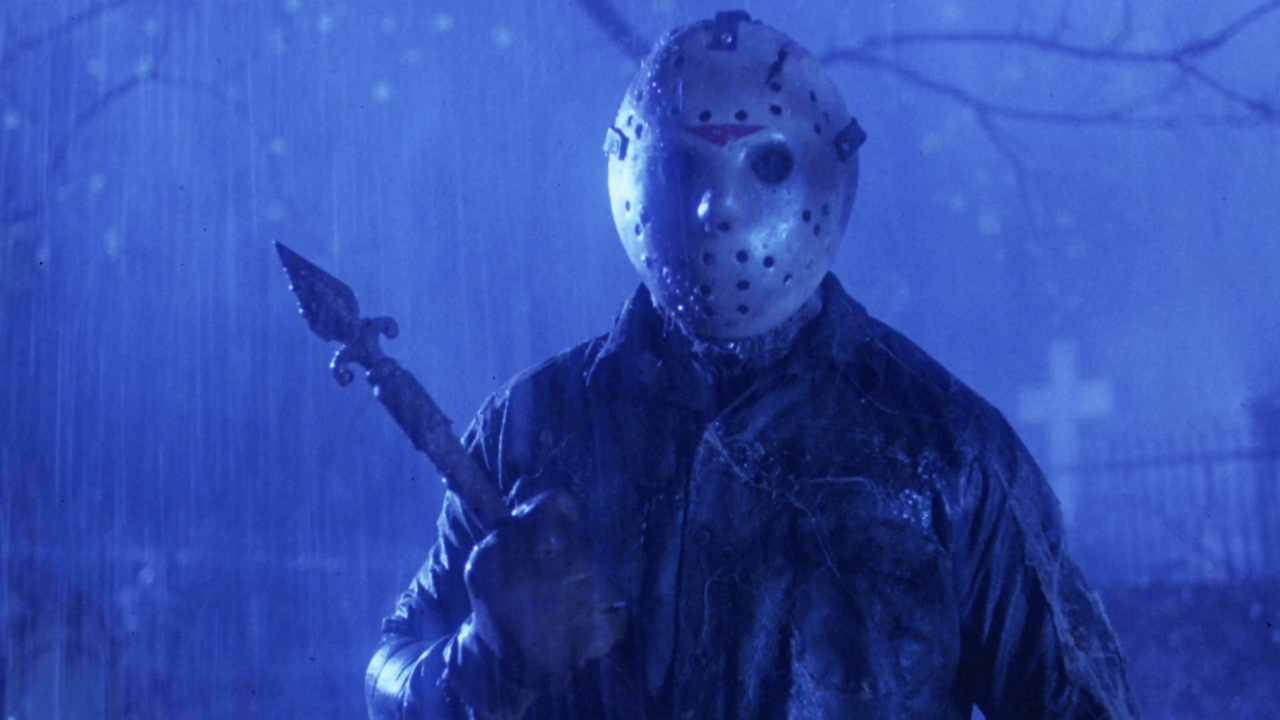
Friday the 13th Part 6: Jason Lives!
Take Jason Voorhees from the Friday the 13th franchise. Here is a character who is a psychopathic mass murderer, and yet he has become one of the most recognized pop culture icons of the last forty years. Horror movie audiences, in a well-documented phenomenon, frequently root for the killer. The victims are written as annoying and disposable, and the audience cheers the kill scenes. What does that say about us? I genuinely think it is worth asking.
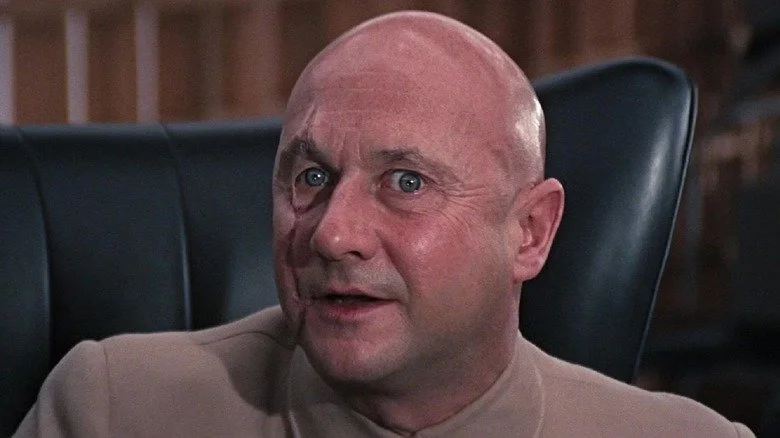
Dr. Evil…..
Or consider Freddy Krueger, the wisecracking villain of the Nightmare on Elm Street series. Everybody loved Freddy in the eighties. He was funny, he had great one-liners. He was also, if you pay attention to the actual backstory of the character, a serial child murderer and rapist. But the audience largely bracketed that and enjoyed the spectacle. Then there is Hannibal Lecter from Silence of the Lambs, possibly the character most responsible for igniting the public fascination with true crime that reached full intensity in the nineties and continues today. Anthony Hopkins's portrayal is genuinely remarkable, and the character is brilliantly written. He is also a cannibalistic serial killer, and people love him. They watch those movies and shows repeatedly. They quote him. They find him charming.
The James Bond franchise gives us another version of this: the cartoonish supervillain. Over twenty-five films in, Bond's antagonists follow a remarkably consistent template. They are megalomaniacal, power-hungry, often foreign, frequently disfigured or otherwise marked as Other, and they hatch schemes of increasingly absurd scale. Ernst Stavro Blofeld, in particular, has become a kind of cultural shorthand for the idea of pure evil: sitting in a chair, stroking a cat, plotting world domination (parodied so well by Mike Myers in Austin Powers). These portrayals tell us something interesting, which is that our intuitive model of what an evil person looks like tends to be someone who is weird, visibly different, possibly disabled or foreign, and obviously unhinged. Evil is Other. Evil is not us.
Our supernatural horror imagery reinforces this. Dracula, Pennywise, werewolves, demons: creatures that exist solely to prey on people, whose entire nature is defined by malevolence. You do not need to think too hard about what motivates them. They are just evil, full stop. And notably, when a real criminal defendant is described as a monster in court or in media coverage, it is drawing on exactly this intuition: this person is so beyond the pale that they are no longer quite human.
This matters because it is wrong, empirically, and because the wrongness has real consequences for how we understand crime and violence and the people who commit them.
Baumeister and the Myth of Pure Evil
The psychologist Roy Baumeister coined the term the ‘Myth of Pure Evil’ to describe the constellation of assumptions that underlie these intuitions, and his work remains one of the most important frameworks in this area (Baumeister, 1997). According to Baumeister, the myth of pure evil has eight core components, and when you lay them out, you will probably recognize all of them from the cultural representations I have been describing.
The first component is that evil is deliberate: the evildoer chose to cause harm. Second, evil is sadistic: the evildoer takes pleasure in causing suffering. Third, the victim is automatically innocent and good, constructed as the moral opposite of the perpetrator. Fourth, evil is alien: evil people are fundamentally different from ordinary, healthy people, outsiders rather than members of our community. Fifth, evil is ancient and persistent: it has always existed as a dark thread running through human history. Sixth, evil is the opposite of order and peace: it is chaos, violence, anarchy, the destruction of civilization. Seventh, evil people are egotistical and narcissistic, marked by obvious dark traits that set them apart. And eighth, evil people lack emotional control: they are driven by rage and impulsivity in ways that ultimately lead to their downfall.
If you think about almost every movie villain you have ever seen, you can probably find most of these features present. And that is precisely Baumeister's point: this is a myth, a culturally constructed template that we apply to real-world harm in ways that distort our understanding of it. The research on actual perpetrators of violence and cruelty looks quite different from this picture, which we will get into more as this series continues.
So What Is Evil, Actually?
Before I get to a working definition, I want to flag something important about the nature of the label itself. Evil is not a clinical diagnosis. It is not a scientific category. It is a social and moral label that we apply to behavior, and understanding who applies it, under what circumstances, and for what reasons is part of the psychology of evil just as much as understanding the behavior itself.
Burris, in his 2022 book Evil in Mind, makes this point compellingly. He argues that people diagnose evil when they perceive a behavior as matching a specific set of features, and that this diagnostic process is deeply shaped by perspective, context, and the relationship between the perceiver and the act in question (Burris, 2022). It is worth thinking about whether the same act would be labeled evil by the perpetrator, the victim, a bystander, and a historian writing about it fifty years later. Usually the answers differ, and that variation is itself data.
The framework Burris proposes is what he calls the Three-Factor Model, and it maps fairly well onto the intuitions most people bring to the question. According to this model, evil is behavior that is intentional, that causes harm, and that is unjustifiable. All three components need to be present for the label to stick cleanly. If harm occurs but was not intended, most people struggle to call it evil. A natural disaster kills hundreds of thousands of people and we do not call it evil, because there is no agent making a deliberate choice. Accidental harm, even catastrophic accidental harm, sits in a different moral category. Similarly, if intentional harm can be justified by circumstances, the label becomes contested. Self-defense. Warfare. Punishment. The justifiability prong is where most of the real ethical complexity lives, and it is worth sitting with the fact that nearly everyone who commits what we would call evil acts has some kind of justification available to them, whether or not we find it convincing.
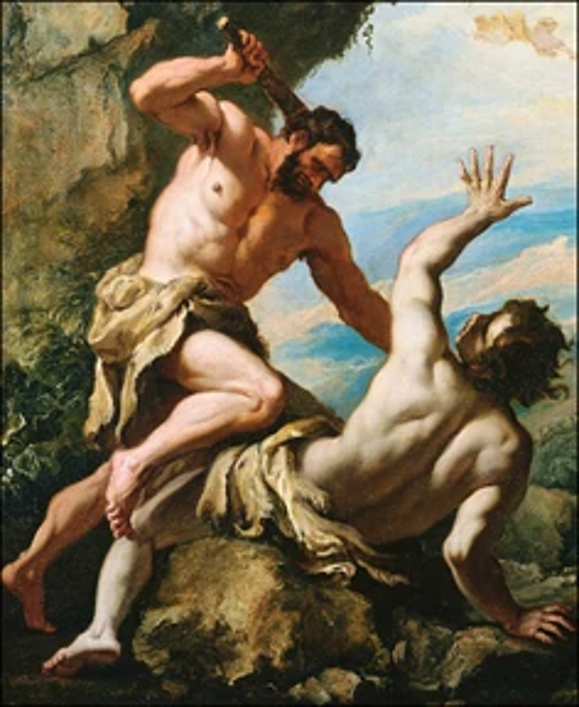
This connects to something Burris describes as the Mark of Cain. In the biblical story, Cain murders his brother Abel, and God marks him so that everyone will recognize what he has done. He becomes an outsider, a wanderer, permanently branded. Burris uses this as a metaphor for the social function of the evil label: it marks someone as outside the moral community, as Other, as the kind of person who is set apart from the rest of us. And crucially, nobody wants that label. People will go to extraordinary lengths to avoid it, to minimize their role in harm, to reframe their actions, to locate justifications, to shift blame. The psychology of moral self-protection is a major thread running through the study of evil, and we will return to it repeatedly.
The Banality of Evil, and Why It Matters
I want to close this opening post with the concept that I think is the most important thing to take away from this entire series, because it is the one that most directly challenges the Myth of Pure Evil and has the most significant implications for how we think about violence and cruelty in the real world.
Hannah Arendt coined the phrase the banality of evil in her reporting on the trial of Adolf Eichmann in 1961. Eichmann was a high-ranking SS officer whose specific role in the Holocaust was to design and operate the transportation systems that moved Jewish people from across occupied Europe to the extermination camps. He is directly responsible for the deaths of at least 400,000 Hungarian Jews, and the apparatus he built was responsible for millions more. He escaped U.S. custody after the war and lived in hiding in Argentina before Israeli intelligence agents captured him and brought him to trial in Jerusalem (Arendt, 1963).
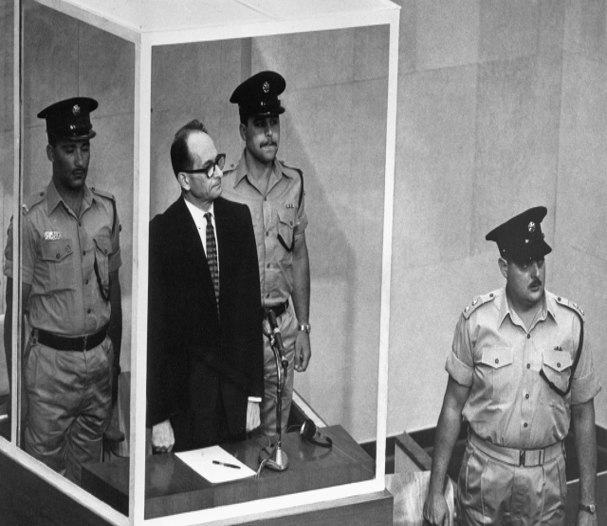
‘The Man in the Glass Booth”
What the world expected, when one of the most operationally significant architects of the Holocaust was finally brought to trial, was a monster. A supervillain. Someone whose sheer malevolence would be visible in the room. What they got was a bureaucrat. Eichmann was, by most accounts, extraordinarily ordinary. Average intelligence. Cowardly. Boring. He spent his testimony insisting that he had just been following orders, executing his assignment as efficiently as he could. He was not indifferent to the suffering he caused out of some profound ideological commitment to cruelty. He was indifferent in the way that people are indifferent to things they have decided are not their problem. Arendt's observation was not that evil is unimportant or that Eichmann was not responsible. It was that the mechanism through which enormous evil gets committed is usually not monstrous psychology. It is ordinary psychology: the suspension of moral judgment, the diffusion of responsibility, the willingness to follow instructions and not ask too many questions.
The scholar Ervin Staub, whose work on the origins of genocide I find essential reading in this area, puts it this way: evil that arises out of ordinary thinking and is committed by ordinary people is the norm, not the exception. And great evil arises out of ordinary psychological processes that evolve, usually with a progression along a continuum of destruction (Staub, 1989). There is almost always an origin story. There is almost always an escalation. The person who commits an act we would consider evil did not simply arrive there from nowhere.
Think about Larry Nassar, the physician who sexually abused hundreds of young athletes over decades. Neighbors described him as quiet and unassuming. Of course they did. Because he was, in the ways visible to them, a regular person. Not because being a regular person and committing monstrous acts are mutually exclusive, but because they are not. That is the hard truth that the Myth of Pure Evil is designed, consciously or not, to protect us from.
Evil is real. It is not supernatural. It is human, which means it is, in some sense, comprehensible. It can be studied, analyzed, and understood. That is not the same as excusing it. Understanding the psychology of how ordinary people come to commit acts of devastating cruelty is not an argument for leniency. It is an argument for taking the phenomenon seriously enough to actually grapple with it.
References
Arendt, H. (1963). Eichmann in Jerusalem: A report on the banality of evil. Viking Press.
Baumeister, R. F. (1997). Evil: Inside human violence and cruelty. W. H. Freeman.
Burris, C. T. (2022). Evil in mind: The psychology of harming others. Oxford University Press.
Staub, E. (1989). The roots of evil: The origins of genocide and other group violence. Cambridge University Press.
