The Ebb of Sanity: H. P. Lovecraft, The Night Ocean, and Bipolar Disorder
This post is a bit of a departure from my usual content here. Normally when I am writing on The Obscured Mirror I am talking about forensic psychology, true crime, the research and clinical work that takes up most of my professional life. But I am also, as most people who know me are aware, a fairly committed nerd. And one of the things I have been a nerd about for a long time is horror literature, particularly the weird fiction tradition of the early twentieth century, and particularly the work of H. P. Lovecraft.
So today I want to talk about something that sits at the intersection of those two parts of my life: a paper I wrote, and subsequently presented and published as a book chapter, examining Lovecraft's final collaborative story, The Night Ocean, through the lens of bipolar disorder. It was the first piece of work I did that brought my psychology background into direct contact with my love of weird fiction, and it remains one of my favorite things I have ever written. I am glad to finally share it here.
Who Is H. P. Lovecraft?
Howard Phillips Lovecraft was an American writer from Providence, Rhode Island, who lived from 1890 to 1937. He worked primarily in the genre that would come to be called weird fiction, a tradition of dark, atmospheric, and often philosophically unsettling literature that drew heavily on Edgar Allan Poe and blended elements of horror, science fiction, and gothic romance into something genuinely new. Lovecraft's particular contribution to the genre was the concept of cosmic horror: the idea that the universe is vast, indifferent, and populated by forces so ancient and alien that human beings are not their enemies but simply irrelevant to them. His most famous creation, the eldritch god Cthulhu, sleeping in a sunken city beneath the Pacific, is a good representative example. These are not evil forces in the traditional horror sense. They do not hate us. They simply do not notice us, and the horror is how absolutely insignificant we are in the unfeeling universe.
Lovecraft is also, it must be said, a genuinely complicated figure. His racism and xenophobia were pervasive and, by any standard including those of his own era, extreme. This is a real and serious problem with his legacy, and it is something the scholarly and fan communities that engage with his work continue to grapple with actively. I raise it here because intellectual honesty requires it, and because the attempt to understand Lovecraft as a human being, including the psychological factors shaping his fears and his hatreds, is part of what makes his work interesting as a subject of study.
What drew me to Lovecraft as an adolescent was partly just the atmosphere of his writing, which is genuinely distinctive, heavy with dread and antiquarian detail and a sense of something enormous lurking just beyond the frame of perception. But what has kept me engaged with him as an adult, and what eventually led me to the research I am describing here, is the way his biography and his psychological state are so visibly embedded in his fiction. Lovecraft's mother and father both died in Providence's Butler Hospital after being institutionalized for mental illness. He himself experienced a serious nervous breakdown as a young adult and was plagued throughout his life by depression and night terrors. The fear of madness, the fragility of sanity, and the terror of an indifferent universe are not abstract themes in Lovecraft's work. They are the product of a life shaped by those exact fears (Joshi, 1996).
Necronomicon Providence and the Armitage Symposium
As a certified geek, I have attended every iteration of Necronomicon Providence, a biennial convention dedicated to Lovecraft's life and legacy, held in his home city since 2013. It is extremely fun and extremely nerdy, and I say that with great affection. It draws literary scholars, horror enthusiasts, artists, game designers, and all manner of people connected to the weird fiction tradition, and the combination produces a genuinely singular atmosphere. Providence is a wonderful city for this kind of gathering. Lovecraft's ghost is everywhere, which is either charming or unsettling depending on your disposition.
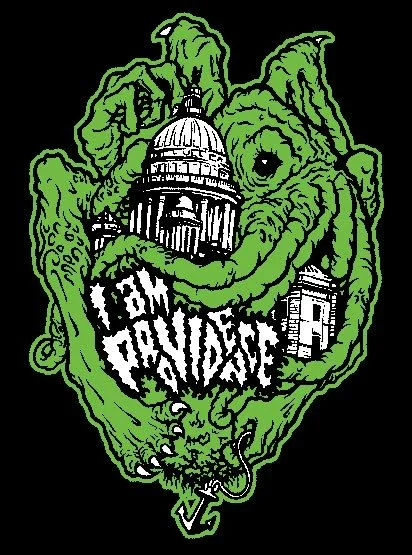
Within the convention is an academic track called the Armitage Symposium, named after the fictional Miskatonic University professor who features in several Lovecraft stories. The symposium hosts formal presentations on Lovecraft's work and legacy, most of them drawn from literary criticism and cultural studies. My work has been a bit of an outlier there, because I come at the material from a psychology and forensic mental health perspective rather than a literary one, and that angle has apparently been well received. I have presented at the Armitage Symposium four times now, and I will say, with what I hope is appropriate humility, that the audience engagement at Necronomicon has been some of the most gratifying I have experienced across any conference setting. The first time I presented, people tracked me down days later at the convention to keep talking about the work. Someone at my third presentation told me they had read my book chapter. That has never happened to me at an academic conference, and I am not going to pretend it is not deeply satisfying. I’m excited to be presenting at Necronomicon 2026 in a couple of weeks and will share that paper in the future. But, as it’s on my mind and I think a fun introduction, this blog post is about my first paper I presented at Necronomicon in 2019.
The paper, ‘The Ebb of Sanity: The Night Ocean and Bipolar Disorder’, was inspired by my colleague Dr. Tyler Smith, who is both a Lovecraft enthusiast and a brilliant physician. It was Tyler who first suggested the connection between The Night Oceanand bipolar disorder, and as we discussed the idea further, I became genuinely captivated by it and decided to write it up formally. The paper was eventually published as a book chapter, and it has remained my favorite piece of scholarly work I have done in this particular corner of my life.
The Story Itself
The Night Ocean is Lovecraft's last completed work of fiction, written in collaboration with his young friend and correspondent Robert H. Barlow. The attribution has been a matter of some scholarly debate: early assessments assumed roughly equal contribution from both authors, but the later discovery of Barlow's original manuscript suggests that Barlow was in fact the primary author, with Lovecraft contributing relatively limited material (Joshi & Schultz, 2001). For the purposes of this paper and this post, it is treated as a Lovecraft story because that is how it has historically been classified and because Lovecraft's thematic fingerprints, even if lightly applied, are visible throughout.
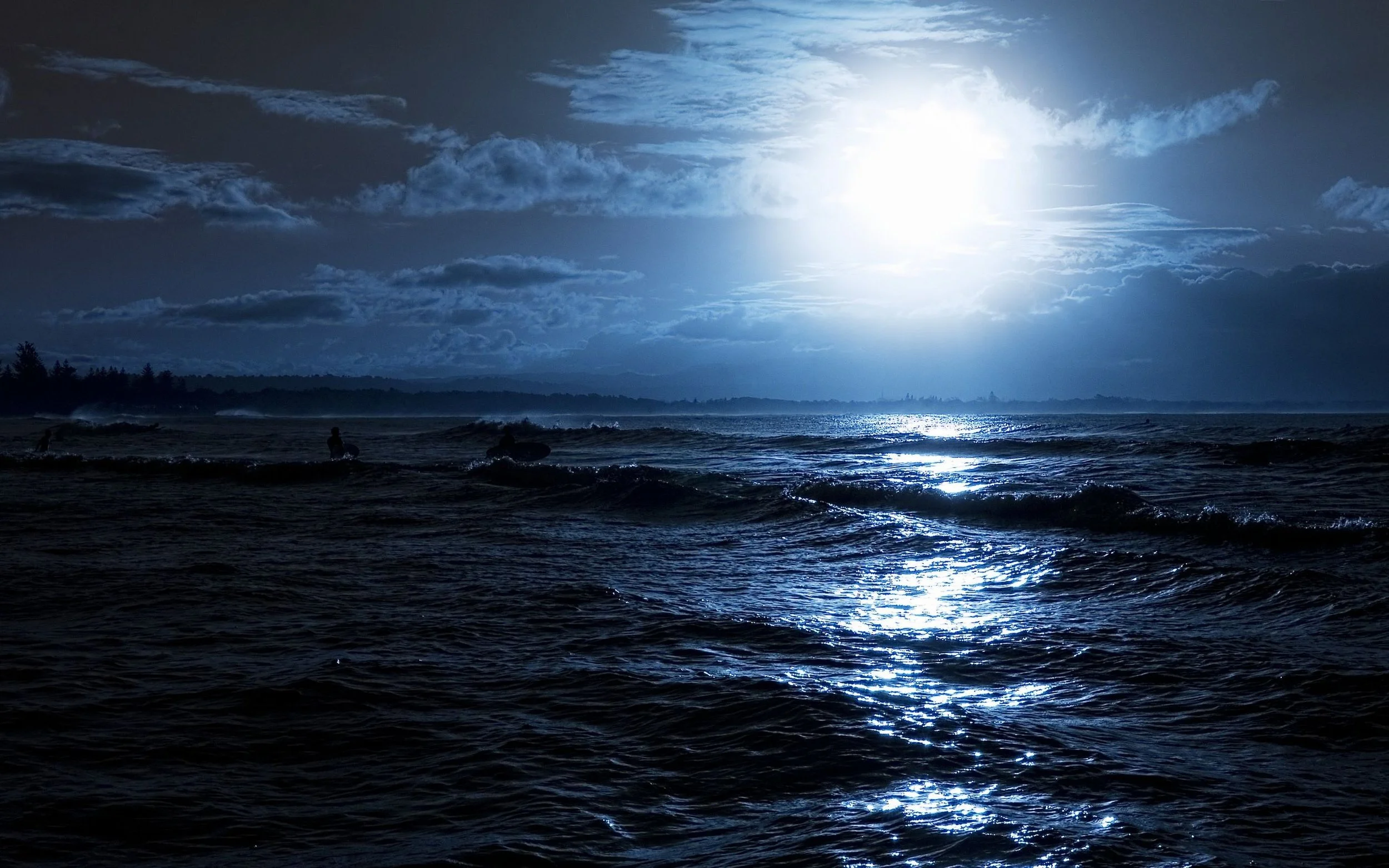
The story is short, quiet, and unlike most of what people associate with Lovecraft. There are no tentacled gods, no cities of non-Euclidean geometry, no gibbering cultists. Instead, an unnamed artist arrives at the small seaside resort of Ellston Beach in late August, seeking rest after exhausting himself on a major mural project. He rents an isolated cottage a mile from town, and the story follows him through the end of summer and into early autumn. He swims, walks the beach, contemplates the ocean, observes the tourists with mild disdain, and gradually becomes aware of strange and disquieting things: odd carvings on a bone he finds in the sand, a series of unexplained drownings, dark shapes moving in the water during a storm, and eventually what may or may not be a strange humanoid creature emerging from the waves on a moonlit September night. The story closes with the narrator leaving Ellston, and with a final elegiac meditation on the ocean as the origin and destination of all things.
It is a beautiful story. I will be honest that I had never read it before Tyler brought it to my attention, because it is not among Lovecraft's famous works and is genuinely easy to miss. When I did read it, I found the imagery striking and the atmosphere genuinely melancholy in a way that felt more personal and vulnerable than most of his fiction. The story reminded me, emotionally, of Block Island or something like Old Orchard Beach a hundred years ago, that specific quality of a small seaside resort at the end of the season, the tourists gone, the light going flat, the place suddenly revealed as strange now that its purpose has passed (Ray Bradbury’s “The Lake” reminds me of this too). If you want to read it, the full text is available for free on the HP Lovecraft archive online, and I would encourage you to do so before reading further, because the analysis is richer if you have the story in your head.
What We Mean by Bipolar Disorder
Before getting into the analysis, a brief orientation to bipolar disorder is in order, because the term gets used loosely in popular discourse in ways that can obscure what it actually describes. Bipolar disorders are a category of mood disorders characterized by the presence of both depressive states and manic or hypomanic episodes, though as the DSM-5 makes clear, the specific pattern, severity, and course vary considerably across the diagnostic spectrum (American Psychiatric Association, 2013).
Manic episodes involve a distinct period of elevated, expansive, or irritable mood accompanied by increased energy, decreased need for sleep, heightened goal-directed activity, distractibility, and often impaired judgment. Some individuals channel manic energy productively; Kay Redfield Jamison's work on the relationship between bipolar disorder and artistic temperament is a popular exploration of this point, and we will return to it shortly (Jamison, 1996). But manic episodes are also frequently characterized by the kind of consuming, unsustainable effort that leaves a person depleted when the episode subsides. Depressive episodes look much like major depression: low mood, fatigue, anhedonia, feelings of worthlessness or hopelessness, and in severe cases suicidal ideation. The two states can alternate with intervening periods of baseline functioning, or they can cycle rapidly, and the course of the illness varies significantly from person to person.
The history of recognizing what we now call bipolar disorder is longer than most people realize. Aristotle and Aretaeus of Cappadocia both described states of extreme mood in the heroes of Homer's Iliad. Plato described what he called theia mania, or divine madness, a state of heightened insight and inspiration accompanied by extreme emotional volatility. Hippocrates was the first to characterize melancholia and mania as disease states rather than divine visitation. The modern categorization of manic-depressive illness traces to Emil Kraepelin's work in the late nineteenth century, which linked depression and mania as aspects of a single disorder rather than separate conditions (Angst & Marneros, 2001). I mention this history not simply as background but because it matters for understanding why the imagery of bipolarity shows up so persistently in literature and art: these states have been part of human experience and human storytelling for as long as we have records.
The Case for The Night Ocean as Bipolar Allegory
The central argument of the paper is that The Night Ocean functions as an allegory for bipolar disorder, not because Lovecraft or Barlow intended it as such, but because the structure of the narrative and the arc of the narrator's experience map so precisely onto the clinical presentation of bipolarity that the reading is almost impossible to resist.
The story begins with the narrator arriving at the beach in a state of exhaustion following what he describes as an intense, consuming creative effort. He had spent the better part of the year on his mural, driven by what he calls a near feverish energy, and he has come to Ellston to rest a weary mind. This opening reads, from a clinical perspective, as the tail end of a manic episode: the hyperfocus, the sustained extraordinary effort, the depletion that follows. Jamison's work on artists and writers with bipolar disorder documents this pattern extensively, the way manic energy fuels creative output until the person simply runs out of resources and the crash comes (Jamison, 1996).
Once at Ellston, the narrator settles into what appears to be a brief period of baseline functioning. He swims enthusiastically in the cold water, delights in the sunlight, enjoys his solitude, and feels, as he puts it, rejuvenated and protected by the sea. This is not quite happiness in the full sense, but it is stability and something resembling contentment. He is, as he describes it at one point, content for many days.
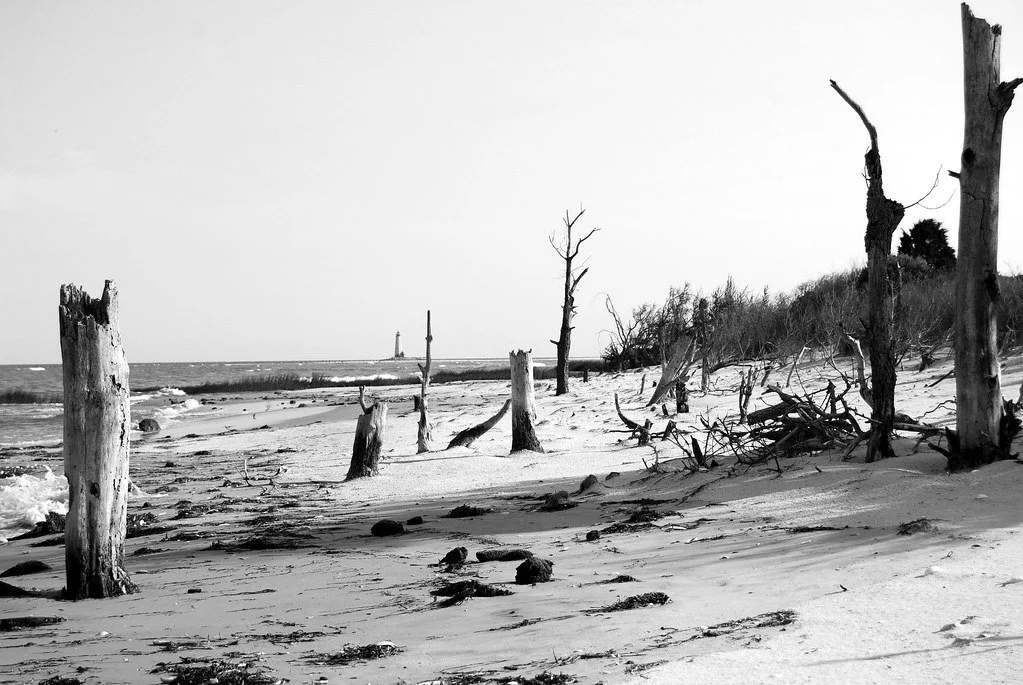
Then the summer begins to turn. August becomes September. The tourists thin out. The weather shifts from brilliant sun to long intervals of cloudiness. The days grow shorter. And with the season, the narrator's mood changes, darkening in a way that tracks the clinical presentation of a depressive episode following a manic one. The DSM-5 notes that roughly sixty percent of manic episodes are immediately followed by a depressive episode, and that there is also a seasonal affective subtype of bipolar disorder in which mood cycling is linked to changes in light and season (American Psychiatric Association, 2013). The Night Ocean maps both of these features with striking fidelity.
The descent is gradual and then total. The narrator describes his dark moods alternating with brief flashes of exultant pleasure, the mixed-state quality that characterizes many bipolar depressive episodes. He finds the bone with strange carvings, hears of the drownings, sees the shapes in the water during the storm, and discovers what may be a decomposing hand on the beach. He stops swimming. He stops going into the village. He describes himself as a man who no longer cares to live, fearing death as he does life, a formulation that captures passive suicidal ideation with clinical accuracy. When the telegram arrives informing him that his mural has won the art contest he entered at the start of the summer, he receives the news with what he calls a curious apathy. He simply does not care. This is anhedonia: the inability to experience pleasure in things that previously mattered, the definitive symptom of a depressive episode.
The supernatural elements of the story, the shapes in the water, the bone, the creature on the beach, can be read through a different clinical lens as well. The paper argues that these experiences are consistent with the psychotic features that can accompany severe bipolar episodes. Visual experiences of ambiguous, shifting shapes that vanish when approached, the personification of the ocean as an entity that watches the narrator, communicates with him, and demands things of him: these map onto the clinical phenomena of hallucination and ideas of reference, the delusional tendency to find personal significance in random or neutral events (Kiran & Chaudhury, 2009). The narrator himself acknowledges that he cannot be certain what he has seen. The story is studiously ambiguous about whether the supernatural elements are real, and that ambiguity is part of what makes the bipolar reading so compelling. We are inside a mind that may be unreliable, in a story that never clarifies whether it ought to be (Dudley et al., 2012).
The Environment as Emotional Mirror
One of the most elegant features of the story, from a literary standpoint, is the way the environment functions as a direct externalization of the narrator's interior state. This is a classic technique of literary Romanticism, where landscape and weather serve as projections of character's psychology, and it is deployed here with considerable skill. The three primary environmental elements in the story, the changing seasons, the weather, and the ocean itself, all move in lockstep with the narrator's mood.
In the early weeks at Ellston, the sky is brilliant azure and cloudless, the sun constant and revivifying, the ocean warm and welcoming. As the narrator's depressive episode descends, the sky becomes, in his language, colorless and oppressive, then carrion-colored, then corpse-like. The ocean, which had been a source of healing and renewal, becomes, as he puts it, slowly hateful. He writes that something of the darkness and restlessness of the sea had penetrated my heart. The sea holds sinister secrets it jealously guards. The once-friendly waters babbled meaningfully at me, and eyed me with strange regard. The anthropomorphization of the ocean, its acquisition of mood and agency and intention, is another of the paper's clinically legible elements: this is apophenia, the tendency to perceive meaningful patterns and personal significance in neutral phenomena, which has been linked to the prodromal and active phases of psychosis in the research literature (Mishara, 2010).
The closing lines of the story extend the environmental allegory into something almost geological in its reach. The narrator meditates on the ocean as the origin of all things and the destination to which all things will return. The sea will go on crashing against dark shores after the last human being is gone, after the last star dims, until the end of the world. It is a beautiful and deeply bleak passage, and it resonates differently when read as the conclusion of a depressive episode rather than as a piece of Lovecraftian cosmic horror. The indifference of the universe is not abstract here. It is felt.
Barlow, and a Melancholy Postscript
Robert Barlow, who likely wrote the majority of The Night Ocean, went on to become Lovecraft's literary executor after the older writer's death in 1937. He eventually became a distinguished anthropologist and academic, teaching at Mexico City College and making significant contributions to the study of Aztec codices. He died by suicide in 1951 at the age of thirty-two.
I do not want to overstate the biographical reading of the story, and the paper is careful to acknowledge its limitations as an allegorical interpretation. The Night Ocean was not intended as a clinical case study in bipolar disorder, and responsible literary analysis requires holding the argument lightly. But knowing what we know about both authors, the story carries a weight that is genuinely difficult to set aside. Vast and lonely is the ocean, the narrator says at the close. The line is more poignant than Lovecraft or Barlow could have intended it to be.
This paper mattered to me for reasons beyond the intellectual puzzle of the argument. It was the first time I brought my clinical and research background into direct conversation with the fiction I love, and it produced something that felt genuinely new in both directions. The psychology illuminated the story in ways that straight literary criticism might not have reached. And the story, in turn, illustrated the inner experience of a bipolar depressive episode with a vividness and intimacy that clinical case descriptions rarely achieve. Literature can do things that diagnostic criteria cannot, and part of what I wanted to show in this paper is that the conversation between psychology and fiction is worth having, in both directions.
The Night Ocean is free to read online, and I have linked it above. I hope you will. And if you are interested in the full paper, it is published as a chapter in Lovecraft Proceeding 4 available at: https://www.hippocampuspress.com/journals/lovecraftian-proceedings/lovecraftian-proceedings-no.-4
References
American Psychiatric Association. (2013). Diagnostic and statistical manual of mental disorders (5th ed.). American Psychiatric Association.
Angst, J., & Marneros, A. (2001). Bipolarity from ancient to modern times: Conception, birth and rebirth. Journal of Affective Disorders, 67 (1-3), 3-19.
Barlow, R. H., & Lovecraft, H. P. (1936). The night ocean. The Californian.
Dudley, R., Wood, M., Spencer, H., & Brabban, A. (2012). Identifying specific interpretations and use of safety behaviors in people with distressing visual hallucinations: An exploratory study. Behavioral and Cognitive Psychotherapy, 40(3), 367-375.
Jamison, K. R. (1996). Touched by fire: Manic-depressive illness and the artistic temperament. Free Press.
Joshi, S. T. (1996). H. P. Lovecraft: A life. Necronomicon Press.
Joshi, S. T. (2010). I am Providence: The life and times of H. P. Lovecraft. Hippocampus Press.
Joshi, S. T., & Schultz, D. E. (2001). An H. P. Lovecraft encyclopedia. Hippocampus Press.
Kiran, C., & Chaudhury, S. (2009). Understanding delusions. Industrial Psychiatry Journal, 18(1), 3-18.
Mishara, A. L. (2010). Klaus Conrad (1905-1961): Delusional mood, psychosis, and beginning schizophrenia. Schizophrenia Bulletin, 36(1), 9-13.
Plato. Phaedrus (244d-244e). Perseus Digital Library, Tufts University.
